
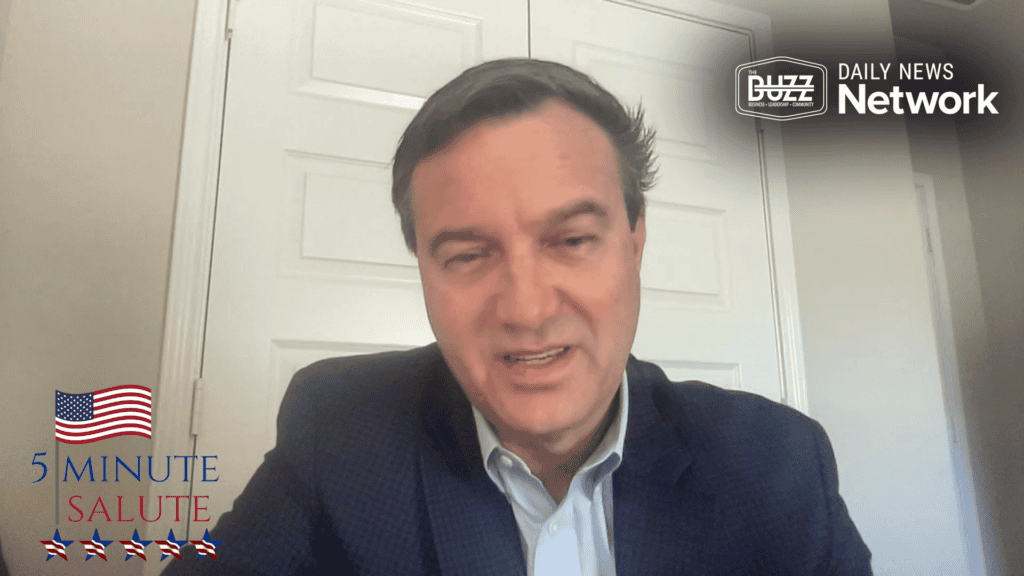
This segment is a Veteran-focused talk show that showcases individuals and companies in the community and is focused on Veteran leadership, service, stories and transition. Our Veteran host highlights other Veterans who serve, have served and who are doing great things in their business and in their community. Today our host, Chris Budihas, spoke with Dean Huard of Strategic Partnerships.
Dean Huard
Strategic Partnerships
Consultant/Former City Manager
Website address: https://jlpowersandassociates.com
What was the biggest obstacle you had to overcome in your business?
As City Manager, I had to overcome the challenge of convincing five city councilors and Mayor that I was competent transitioning from the military with little to no local government experience.
How do you define success?
Success is serving others and my community and helping those that I lead achieve their goals and aspirations.
How did you get started in your field of work?
While on active duty I volunteered on a local city board then did a fellowship with a local city.
Transcript:
Speaker 1
Welcome to the Five Minute Salute- I’m your host, Chris Budihas. Today’s segment, sponsored by the Military Affairs and Veterans Department for the City of Jacksonville. Harrison Connors and his team squared away our veterans with the benefits they earned through their military service. Joining me from Austin is another veteran, Dean Huard with strategic partnerships team. Dean, how are you?
Speaker 2
I’m great. Hey, appreciate the opportunity. Thanks for having me.
Speaker 1
Thanks for taking time. A little bit of background. Where are you originally from and what you do in the military?
Speaker 2
So originally from Southern California. My dad was, was was on the Coast Guard. He was a war officer. And, but, you know, we lived, I was born in Los Angeles, lived in Connecticut, Virginia, but high school in San Diego. And then I went up north to, to duck land in Oregon and became a duck, at UVA and then career wise.
I got my commission from University of Oregon, and I did 13 years guard reserve. And then after that 9/11 happened and just had the itch to continue to serve. And so I came on active duty, at the time, I was living in Palm Springs doing corporate business development, and then, and then came an active duty after that.
And then retired in 23.
Speaker 1
Wow. It’s great. You know, thanks for your service. And obviously didn’t do that. We couldn’t do this here today. And and since 23, you’ve done a lot. Can we talk first about you formally as city city manager? Sure. What was that role? And, you know, for our veterans out there, because a lot of veterans talk about why their service getting into you either that space or in politics.
What’s some of your advice for them now?
Speaker 2
So that’s exactly what I did was I still want to continue to serve. I’m a huge advocate for, for veterans going into, local government because it’s just it really it’s it’s another extension of service. And if you don’t want to, you know, do the GSA route, do federal work. I think local government is a really good fit for veterans because, you know, you are, you’re basically managing bleeding, you know, departments, capabilities, matching those with requirements, like we’ve been, you know, told to do and we’ve done on active duty, for years.
So, you know, for me, I became a city manager of a very small town, about 2600 people just outside of Austin. Very unique community because it was, it was gated. Most of our services were, were contracted out. But again, it was just a great experience for me to, to, to become a city manager.
And unfortunately, I separated from the city, because it is a, it’s an appointee position. It’s not elected. But depending, it doesn’t matter what size the city, because I still had a, five person council and a mayor. And then then again as a city manager responsible for delivering all the services, for the city.
Speaker 1
So that’s awesome. And so I’ve got five other friends that are in the space as city managers, different parts of the country, and there’s definitely some nuances at each geographical location. You know, a lot of them. And what I, what I’m hearing from you and I hear from them is a lot of their, you know, the things they learned as far as leadership, planning, execution, all those skills translate very well in that space.
What is something that you had to learn that that you were like, oh, this is something I haven’t seen or, you know, done in a while. And when you had that position.
Speaker 2
Well, I think first and foremost is I’m, I think the government or the military teaches you the importance of, of, of governance. And no matter what deployment we were on, you know, if we were, supporting Europe, supporting Iraq, Afghanistan, and obviously we saw that, during, during during that Iraq war where we were responsible for, basically rebuilding that country.
So I think any veteran has a real, advantage when it comes to, to governance. But but what what they don’t teach you is that, you have to be extremely emotionally intelligent. And I realized or I, I thought that I was very emotionally intelligent, when when I took the position. I think it’s probably reason why, you know, why I was hired.
But. But you get tested, because, again, you’re dealing with, five individual city councilors and a mayor that all have, a different way that they want things done. So I just would say in general that you need to hone your emotional intelligence.
Speaker 1
That’s awesome. Yeah. Because you got a mitigate personalities, you know, as some may or may not be aligned between each other and with you at times. So that’s awesome. Yeah. And it would like we’ve seen that in the past. But I gotta tell folks in the military, there’s a rank structure that kind of makes it a little bit easier than being on the outside partnerships.
Can you tell us about this organization and what you’re doing with them?
Speaker 2
Oh, definitely. I was very fortunate, actually just a few weeks ago, to get picked at work through partnerships. So it’s a government consulting, business to government. Firm that, that that helps corporate clients, through procurement, through state and local government contracts. So, I think I was hired, you know, first and foremost, because I had a background in local government and city management.
So, so the idea is just to help, you know, those, those corporate clients with, kind of navigating the system, our CEO, Mary Scott Nabors been in business for 30 years. Very successful. Because, you know, she’s, just has a really good formula for, you know, how to have that, that public private partnership.
So, so far, so good.
Speaker 1
That’s wonderful. It’s funny, you know, doing things here in our small business community in northeast Florida, southeast Georgia, and I tell folks and I do some part time consulting with a company that does help small to medium companies do work with specifically, the federal government level is when you try to, if you try to get into a system of a chairman that you don’t understand, you’re going to spend a lot of money and mental energy on something that you may want to hire somebody else.
It’ll be actually cheaper and you’ll have a better return on investment. So it sounds like the value proposition you guys bring is that expertise. So companies aren’t wasting time and effort and money trying to pursue contracts in which you they might be aligned for ones that they don’t know about, that you guys know that you can, you know, target them in on.
Speaker 2
Well, that’s that’s a big advantage to SPI is that there’s a consulting, division and a research division, and that research division, employs, you know, a lot of, young, hungry, you know, government types that graduated from the, the LBJ school at UT and, and, A&M, and they’re just really good at getting digging deep and trying to find, all those different opportunities from, bond reports, to, to capital improvement programs, helping, you know, again, those corporate clients find out where those, you know, where those opportunities are.
Speaker 1
Yeah. As we get ready to wrap up, what’s, you know, you, retired in 2023, so, relatively, you know, not too long ago. What’s your, like, 1 or 2 bits of advice for those folks that are about two years out from separation that they should consider?
Speaker 2
I think a lot of folks have said this, but, but I think it’s never too early. It’s never too early to prepare. I personally thought I was I was good because I had done the corporate world before I came on active duty. But I, I just think it’s important that you really learn to build yourself first.
And I say that because of the transition issues that, you know, that I went to because you just you need to make sure, you know, you need to make sure you know who you are. And, so over the last two years, I’ve done a lot of reading, on, obviously leadership, but I think the army, the military does a really good job of, teaching you how to lead others, but it’s important that you take the time to self-reflect.
You know, have some stillness in your life and figure out exactly who you are so that you can have, the capabilities that, that corporate America or other government agencies are looking for, and, and really, I think having a tribe, you know, and having a tribe of people, you know, I call a tribe, I went through some, you know, some setbacks over, over this last year or so, some health setbacks.
And it’s that tribe of people that really keep you together. And that network.
Speaker 1
That’s great. Thanks for that advice. So, Dean, as we get ready to wrap up, how can people find you and how will they find strategic partnerships?
Speaker 2
Well, I’m definitely on LinkedIn, so if you,
Speaker 1
Yeah,
Speaker 2
Yeah. If you if you have an opportunity to go by my, my LinkedIn page. So I think that’s the best way both, both myself and SBI have, have LinkedIn, presences. So, yeah. Yeah.
Speaker 1
Well, thanks a lot, Dean. Thank you. Thanks for your service, the nation. Thanks for your service to your community and coming here today than five minutes to tell your story. And we’re going to highly encourage folks to connect the you and I on LinkedIn. And for folks that need services, SBI and I recommend that they either DMU or, you know, contact you guys through your website. Thanks a lot.
Speaker 2
. Thanks, Chris. Have a great day.
Speaker 1
You too. Take care. Hey folks, love to connect with you on LinkedIn. We’ll see our next segment and live with gratitude.
The Daily News Network, Buzz Tv News, and DAILYBIZBRIEF highlight business professionals, nonprofits, veterans and community leaders on over 40 TV Segments including The Horse’s Mouth, Legacy of Leaders TV, Veterans Buzz TV, Finding Your Frequency, and Buzzworthy Businesses.
Teal, The Agency, powered by Client Focused Media, offers marketing agencies a full-service white-label solution to scale their services without the cost or complexity of building large in-house teams. Tailored for small and medium-sized agencies, Teal specializes in relationship-driven lead generation, advanced CRM workflows for personalized client engagement, and end-to-end project fulfillment. With powerful integrations like HighLevel, Stripe, and Zapier, Teal simplifies your operations while optimizing efficiency—saving you valuable time and resources. While other tools on the market like Vendasta, RocketDriver, and DashClicks, may require contracts, Teal provides flexible, no-contract pricing, giving you the freedom to grow on your terms. Ready to elevate your agency’s impact and efficiency? Explore how Teal can help you deliver exceptional results and better serve your clients. Apply on BeTeal.com today to start your journey toward becoming a marketing powerhouse by understanding digital marketing strategies for agencies, SEO best practices for marketing agencies and scaling a marketing agency.